General Ledger
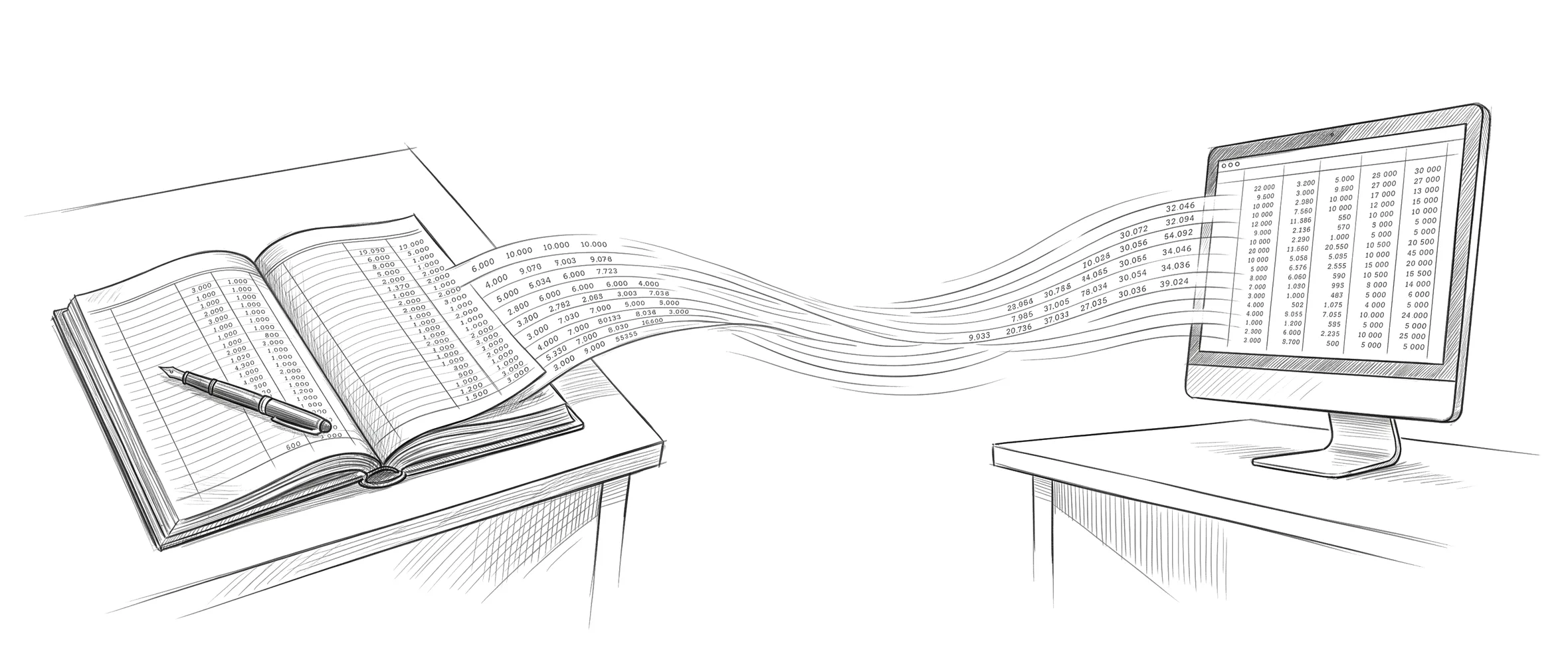
Every load you receive, every order you ship, every payment and return becomes journal entries nobody types, derived from what your floor already recorded, not re-keyed into a second system at night.
It won't close a month on numbers that can't be real.
If a lot drops below zero, a sale posts with no cost behind it, or a cost basis is missing, the close stops, points at the exact rows, and makes someone say what they did about it. If you've ever had to fix your current system's numbers by hand, that's the difference: it catches them before you close, not after.
What you hand your accountant
Your numbers are only worth what stands behind them.
This is what stands behind them: the package your accountant reviews, the statement each month was issued from, who finalized it and who issued it, and every exception that got signed off before the numbers froze. You hand it over. It explains itself.
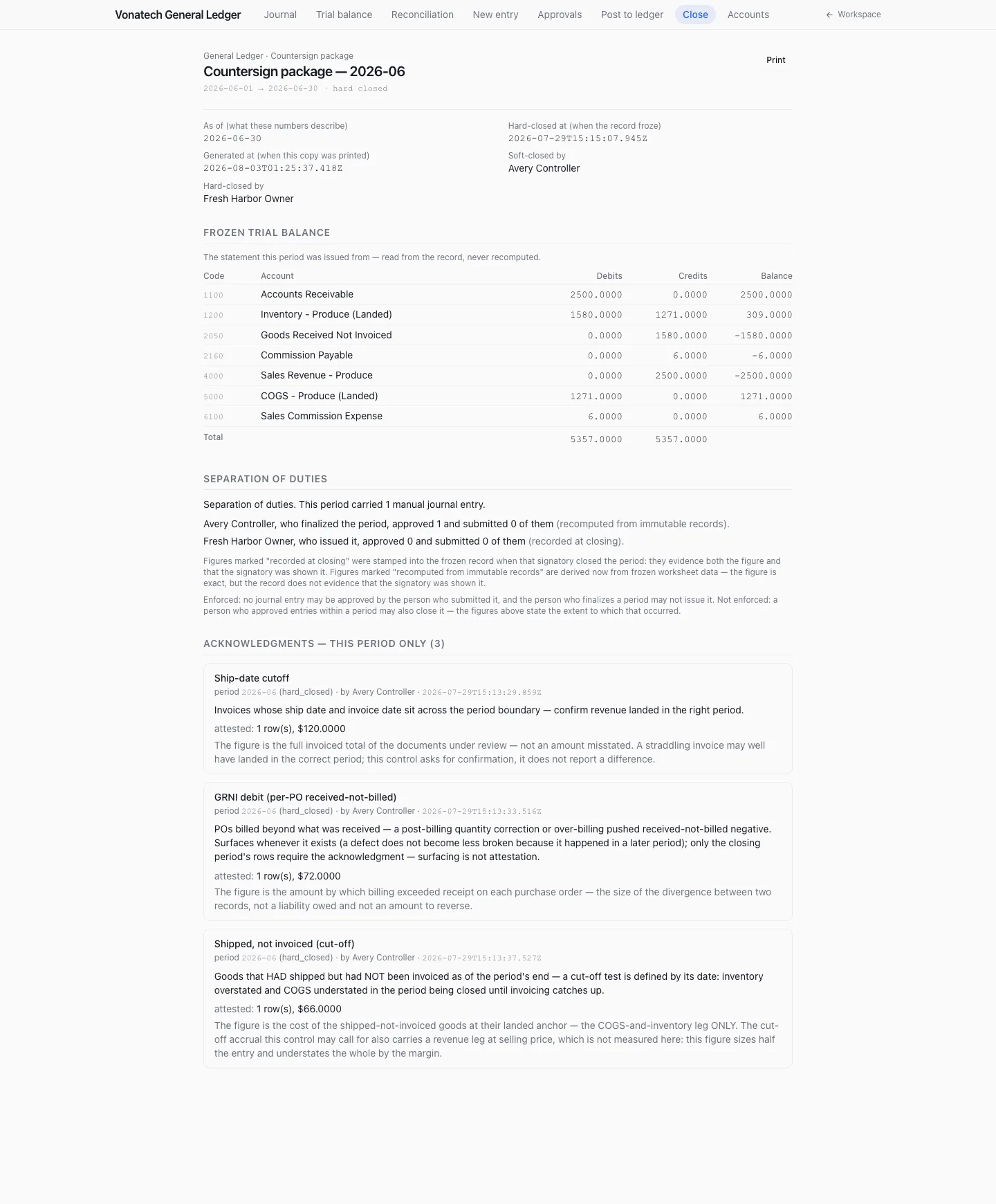
Figures shown are sample data from Fresh Harbor, a demonstration company.
Printed on the package itself
Enforced: no journal entry may be approved by the person who submitted it, and the person who finalizes a period may not issue it. Not enforced: a person who approved entries within a period may also close it, the figures [on the package] state the extent to which that occurred.
A document that discloses its own limits is worth more than one that claims it has none.
How the numbers get there.
Post it once, on the floor. Nobody types it again.
The entries are derived from your operations, never re-entered by hand.
Nobody can quietly change a posted entry: not your staff, not us. Once it's in, it's in.
The database refuses, not a policy.
The person who enters it can't be the only one who approves it.
Two people to post a manual entry, two to close a month.
When a month closes, its numbers are frozen: served exactly as they were, never quietly recalculated later.
A printable package built for your outside accountant to review.
The frozen trial balance, the dates, and the exceptions the closer signed off on.
The proof
Equal all the time.
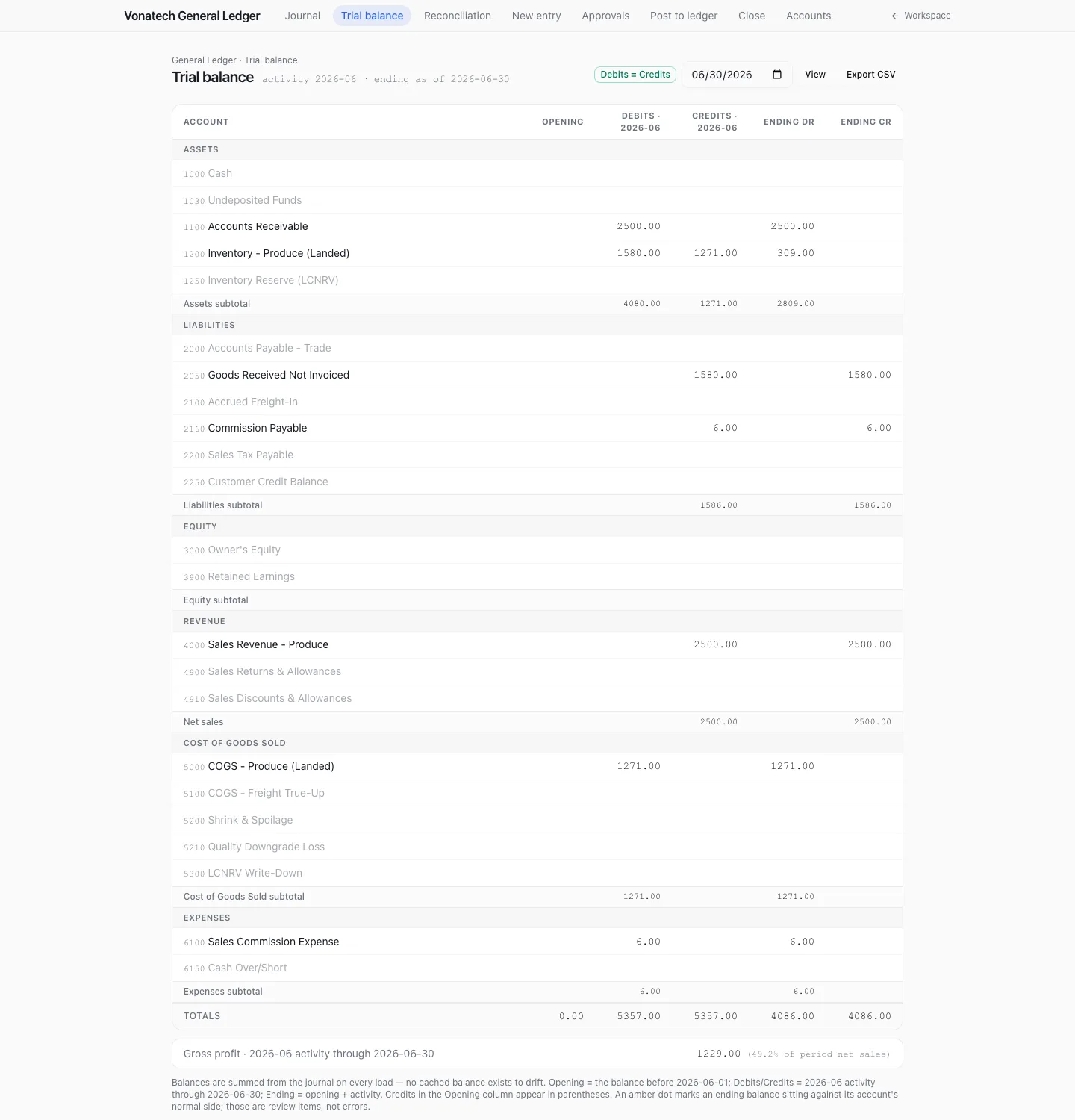
Figures shown are sample data from Fresh Harbor, a demonstration company.
Monthly close today; year-end close ships before your first year-end with us.
We would rather you heard that from us than found it in a demo. The ledger feeds your books and gives your accountant the numbers they need. It does not replace your books.
See it close a month in front of you.
We'll run a close on demo data, stop it on a number that can't be real, and show you the package that comes out the other side.